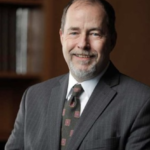
UO faculty take control of athletics

From the UO archives, 18 September 1895:


My OCR chokes on this, but it appoints a committee of 2 profs and 1 student and says
"All proceedings of the Athletics Club concerning Intercollegiate games must have the approval of this committee. This shall in no way interfere with the ? authority of the Faculty. ..."
Back in 1895 the Ducks were leaders when it came to faculty governance of athletics. I'm no history professor, but Teddy Roosevelt didn't found the NCAA until 1906, motivated in part by public outrage over what would now be called repeated MTBI, in part because he figured it would give Harvard an edge over the public universities with recruiting. Since then, there's been a certain amount of slippage here at UO, and nationwide. Harvard, however, is still embarrassing itself
over sports. So is Yale. So is UO. Some things never change.

As for the NCAA and UO's place in it, read the latest from NYT columnist Joe Nocera on what he calls the "moral bankruptcy" of the NCAA. UO Faculty Athletics Representative Jim O'Fallon sits on their infractions committee. What was his role in this decision? Good question.

Independent board this year is a longshot

1/30/2012: None of the competing bills get even a mention in this Bill Graves story on the likely legislative agenda. Session starts Wed. Bills must be out of committee in 2 weeks.

Professor who leaked emails to admin quits senate

1/30/2012: Courtesy of Insidehighered.com,

A Springfield professor who shared emails from other faculty leaders with the University of Illinois president's chief of staff has resigned from the campus senate amid a vote of no confidence by her peers.
Tih-Fen Ting, professor in environmental studies on the Springfield campus, resigned as chairwoman of the University of Illinois at Springfield campus senate on Friday. She also resigned from the University Senates Conference, a cross-campus committee of faculty leaders.
The UIS campus senate has no confidence in her leadership and "condemns her unethical and unprofessional conduct both prior to and during the anonymous email investigation," the resolution stated. Ting's actions violated shared-governance principles and diminished the standing of the campus senate and the influence of the campus within the University Senates Conference, according to the resolution.
Earlier this month, an investigation revealed that Ting sent dozens of emails to Lisa Troyer, UI President Michael Hogan's former chief of staff. Those emails, from an anonymous gmail account, contained various communications and forwarded emails from members of the University Senates Conference. Troyer later resigned amid the investigation into anonymous emails sent from a Yahoo account from her computer to the senates conference.
IU president Hogan's apology is here.

Faculty union, faculty governance, new Constitution

1/29/2012: Many people are wondering if a faculty union would strengthen or weaken existing faculty governance. For example, could the union write the new UO Constitution into a contract and then have legal recourse if our administration walked all over it? What about the Policy on Policies? One of the union organizers forwards some info that might help people make up their minds on this:

I found two contracts that illustrate how a union contract can reinforce faculty governance.  The first is in the current University of Delaware contract that can be found at  http://www.udel.edu/aaup/cba.html, article XVII. Our situation is a little different because we have a constitution that could be specifically endorsed.  The Portland State contract has a better example of wording since they are also governed by OARs and have a constitution.  They have just signed a tentative agreement on a new contract and it still needs to come to a vote of the members, so the contract through 2011 is current and can be found at http://www.psuaaup.net/resources.html
The second link has a lot of info on the PSU AAUP union. I haven't read the contracts, comments on the substance welcome.

RG's Greg Bolt on faculty union

1/29/2012: Story here, not much new:

“We support a worker’s right to organize,” UO spokesman Phil Weiler said. “Our involvement is we just want to make sure we’re providing everybody with factual information so they can make informed decisions, but beyond that we support their right to organize if they think that’s the right thing to do.”
Sure you do. Here's a link to a 2010 post on Johnson Hall secretly hiring a labor consulting firm to deal with the union:
The official line is that the $300 an hour consulting fee was not for advice on how to "oppose the union" - that would be illegal under Oregon law - instead it was for help "conveying relevant and factually accurate information" to the UO faculty. Which explains why the administration tried to keep the contract secret, to the point of including a nonstandard confidentiality clause preventing McKnight from even disclosing the existence of a contract:


Because you don't want to give the faculty factually accurate information about who is giving the faculty factually accurate information. The contract was limited to $25,000 because OUS rules require a public posting on the OUS procurement website for contracts more than that. Clever. Too clever. Dumb.

More NCAA transparency from Randy Geller


December's entire bill is $15,441.41. I'm no art history professor, but I think this page has the most aesthetically appealing redactions, though page 2 has a certain stark symmetry.

Per the agreement between UO's general counsel Randy Geller and CFO Jamie Moffitt, the academic side is on the hook for half the total for Mike Glazier's cleanup of the Willie Lyles scandal - now $100,527.44. You'd think this would mean we'd be allowed to read at least half the words in his invoice.

When Chip Kelly does good, he gets a cut of the Autzen gate and a bonus. When he does bad, the academic side pays. Now that Moffitt is CFO for the entire UO, instead of just the AD, do you think she'll start looking out for the academic side? Get with the transparency program? I'm skeptical. But maybe Kelly will send the faculty and students a nice thank you letter for paying his legal bills, like the one he sent Lyles:


PS - Thanks to bojack.org for his link to this.

Science start-up debacle

1/28/2012: From an anonymous commenter:

Having squandered millions in excessive administrative budget increases, remodeling their offices, golden parachutes, and other brilliant ideas, Johnson Hall’s solution for science startups is to spend against reserves in the humanities and social sciences. Despite having the least funding per student on campus, these programs and the college in which they reside have exercised the financial discipline and responsibility so lacking centrally, and so they have slowly accumulated substantial reserves over the last decade. These are funds they or their college on their behalf, could spend to support the humanities and social sciences.
Instead, Johnson Hall is expropriating the reserves by forcing CAS to use them for science startups without any provision for even partial repayment from the Research office. Repayment could be done slowly by promising a small share of future overhead, but ‘no, we’re in charge,’ said our czars. The longstanding ‘covenant’ with the research office has been that they receive and allocate all grant overhead. In return they assume primary responsibility for startup packages for hires anticipated to receive substantial grants. Having broken that covenant, they now demand that the humanities and social sciences, the least well-funded programs per student on campus to fix their failures.
Were did the money go? Athletics, in part. Jim Bean made the call to spend $1.8 million a year of general funds on the Jock Box tutoring operation. And he's so proud of that he wrote an Op-Ed for the Oregonian about it. Clueless.

Jim will be back

1/28/2012: Berdahl should have announced he was giving Bean an interim appointment ending June 2013. This would satisfy the immediate need for a body to fill out the provost's suit. It would also leave the deck clear for the next president to do an open search. But no:

Colleagues:

The time line for transitions in the Provost office has been determined.  Jim Bean will return as Senior Vice President and Provost beginning July 1, 2012.  He will continue his sabbatical through May 31, 2012, and then serve in a transitional capacity during the month of June.  This will permit appropriate planning and coordination with me, the Executive Leadership Team, and Bob Berdahl as well as an overlap period with the current and soon-to-be-appointed Senior Vice Provost for Academic Affairs.

As the presidential search gets underway, it will be helpful to know who will serve as Provost on an ongoing basis.  I look forward to continuing in my current acting leadership role through the end of this academic and fiscal year.  I appreciate the continuing support and assistance I have experienced.

Lorraine
We're all on a first name basis here, so who needs a job announcement, search, or a performance review? That sort of stuff is just for those faculty schlubs - the ones that Jim gets to evaluate and sign off on tenure and promotions, as provost. The month long overlap with Lorraine is so Jim can recover from his research efforts with old friends and get back up to speed on administrative matters.

FWIW, Pat, the OUS internal auditor, sent out this earlier this week, on her investigation of Jim's sabbatical terms:
FYI.. update
We hope to complete the review this week.

Oregon University System
Internal Audit Division

     Patricia A. Snopkowski, Chief Auditor
     P.O. Box 488
     Corvallis, OR 97339
     Ph (541) 737-0505 Fax (541)737-9133
     Web- http://www.ous.edu/dept/intaudit
     Email- patricia_snopkowski@ous.edu
Nothing yet.

A faculty union will solve all UO's problems

1/27/2012: Or maybe not. Reality check from Rutgers

Who’s right and who’s wrong? The bottom line is that it doesn’t matter, since the administration has lost the trust of its own professors, who routinely perceive it as incompetent, venal and corrupt. As Eaton and her colleagues put it, “The administration has violated our trust and we have lost confidence in its ability to properly manage university resources.”
Sound familiar? There's a sports problem too, of course.

Meanwhile, outside our ivory tower,

1/27/2012: things are *really* going to hell. From Susan Palmer in the RG:

The Springfield district also had a slight increase in the four-year graduation rate, up a point to 62 percent, even as one of its schools, Springfield High, saw its rate drop by almost 6 points. ... The Bethel School District in west Eugene saw its overall graduation rate decline this year, to 57 percent from 62 percent.
And from an op-ed in the NYT:
Only 7 of 10 ninth graders today will get high school diplomas. A decade after the No Child Left Behind law mandated efforts to reduce the racial gap, about 80 percent of white and Asian students graduate from high school, compared with only 55 percent of blacks and Hispanics.  ...
If we could reduce the current number of dropouts by just half, we would yield almost 700,000 new graduates a year, and it would more than pay for itself. Studies show that the typical high school graduate will obtain higher employment and earnings — an astonishing 50 percent to 100 percent increase in lifetime income — and will be less likely to draw on public money for health care and welfare and less likely to be involved in the criminal justice system. Further, because of the increased income, the typical graduate will contribute more in tax revenues over his lifetime than if he’d dropped out. 

When the costs of investment to produce a new graduate are taken into account, there is a return of $1.45 to $3.55 for every dollar of investment, depending upon the educational intervention strategy. Under this estimate, each new graduate confers a net benefit to taxpayers of about $127,000 over the graduate’s lifetime.
As a self-interested professor, I'm all for more public investment in higher education. But the highest social return may well come from much earlier investments. And of course these students are not going to enroll at UO if they don't graduate from HS. Here's info on SAIL, a program run by volunteer UO professors, aimed at addressing this issue.

Moffitt erases Frances Dyke from org chart

1/27/2012: Apparently she's still on the payroll though - as a special assistant to interim Provost Lorraine Davis. Sure is fun spending other people's money on your friends.

Shades of John Moseley. I don't envy Moffitt having to do the performance evaluations on the rest of  her crew. Lots of good people - but also cases who will presumably also soon be bought off with fat golden parachutes, filled with tuition money that should have gone to support research and teaching.


Phil Knight's opinion of independent university trustees that cross "his hero".

 1/26/2012: Pretty chilling to watch:

<a href='http://msn.foxsports.com/video?videoid=a4f05d91-a347-4968-93eb-60b3c15e5069&src=v5:embed::' target='_new' title='Nike&#39;s Knight rips PSU Trustees' >Video: Nike&#39;s Knight rips PSU Trustees</a>

Berdahl and Geller claim President controls faculty authority:

Update: Geller's quotes come from here: http://ous.edu/state_board/polipro Check out the board policies and IMD pdf's - for example athletics. There are all kinds of things UO and OUS pay no attention to in practice. Except when it's convenient for them to use them against the faculty.

1/26/2012: This will get the union a bunch more cards. An email from interim President Berdahl today, apparently written with the help of Randy Geller, asserts he has the power to "define the scope of faculty authority" down to what Senate committees can do:

... as summarized below from information provided by the Office the General Counsel, the President is assigned the power to define the scope of faculty authority, including the charges of senate councils and committees.

•           The University of Oregon Constitution must be consistent with Oregon Law and State Board of Higher Education policies and Internal Management Directives.

•           ORS 351.010 provides that the Oregon University System is conducted under the control of the State Board of Higher Education. Under ORS 351.070(4)(b), the Board has the authority to adopt rules and bylaws for the government of each institution under its control.

•           As outlined in ORS 352.004, the president of each state institution of higher education within the Oregon University System is also the president of the faculty and the executive and governing officer of the institution. Subject to the supervision of the State Board of Higher Education, the president of the institution has authority to control and give general directions to the practical affairs of the institution.

•           Board Policy 3.105(F)(7) authorizes each institution to formulate a statement of internal governance expressed as a constitution or in another appropriate format. "All statements of internal governance will be consistent with statutes governing the Oregon State Board of Higher Education, the Oregon University System, and any applicable Board rules, policies, or IMD."

•           Board Policy 3.105(F)(6) states that "the institution president is authorized to convene and preside over the faculty and to veto any decisions of the faculty or its representative bodies. The institution president will define the scope of faculty authority – including its councils, committees, and officers, subject to review by the Chancellor – except as provided in Board rule, policy, or IMD." ...

Regards,

Bob Berdahl
The faculty union organizers have argued that one reason to support a union is that it would be able to write faculty governance into the contract, establish a clear legal basis for it, and provide experienced lawyers to help the faculty regain the control it once had over university matters.

At the moment, we are utterly at the mercy of Randy Geller's peculiar interpretations of the law, and the benevolence of our president. No recourse. Geller works for Pernsteiner, and Pernsteiner picks our next president.

UO Police swearing in ceremony

1/25/2012: Had a comment about this a few days ago:

DPS secretly swore in police officers last week and no one from the public was invited. Free lunch and beverages provided along with the rights to be a cop and arrest people. I heard it was mainly the administrators that were sworn in. So if it was administrators becoming full fledged sworn police then what about the officers? 
Anyone know any more?

Dr. Pernsteiner speaks - but no Matt Donegan

1/25/2012: It's taking George a while to find UO community members willing to serve on a committee with him. Wonder why. If you are faculty and haven't been contacted, you are probably not on the list. Pernsteiner and Ford will be here next month to explain themselves - Matt Donegan is clearly never going to set foot in Eugene again in public.

I wanted to update you on the search process for the University of Oregon president. Although we had hoped to be able to name the search committee by now, we do not yet have commitments from all the people we are contacting. We hope now to be able to finalize the membership late this week or early next. With the advice of Interim President Berdahl and a panel of faculty and students, we have chosen a consulting firm to assist in the search. We selected Diversified Search as the apparently successful proposer. This is the same company that recently assisted in two high level executive searches at the University. We are currently in the midst of the legally required period for other proposers to protest that selection. If no protest is lodged, Diversified can start work later next week.

We continue to expect to have a series of forums and meetings regarding the search process on February 8, including the University Senate meeting at 3:00 that afternoon.

Thank you.

George Pernsteiner
Chancellor, Oregon University System

New Budget Model revisited

1/25/2012: Back in Feb 2010 - almost 2 years ago - I wrote the overly optimistic post below, about Brad Shelton's "New Budget Model". The idea was that money should follow students - except for a tax for central admin expenditures. At the time the tax rate for Johnson Hall was 28%. How's this working out?

Not so good. Read Shelton's web site here. The September 2011 tax rate had been raised to 35%. And it turns out even this is not enough to pay the $2 million in raises for administrators like Frances Dyke and de Kluyver, Jim Bean's beamer and 5 big pet ideas, Police, the $1.83 million Bean and Frances Dyke have had us paying for Jock Box tutoring, subsidized overheads rates for athletics, etc. Forget about legitimate basic central administration functions like IT support, research startup, accounting, classrooms, etc.

So, word down at the faculty club is that the central administration is now organizing another raid on the money that is supposed to support our academic mission. Either another tax increase, or possibly new CFO Jamie Moffitt will abandon the whole thing, and go back to budgeting a la Moseley. Comments welcome.

2/11/2010: Brad Shelton, UO's new VP for Budgeting, has been working on a new budget model for UO. This model will specify how UO's money is allocated to the schools and the administration. I think this budget model will do three important things.

First, it will provide some basic transparency about where our money comes from and where it goes. Many of the newly available public resources on UO expenditures derive from Shelton's need for the information to complete this process. Until he got involved, this information was deliberately hidden away from the faculty and even the colleges, and there was no prospect for open debate on UO spending priorities.

Second, the model will, for the first time, impose a hard budget constraint on the administration. In the past, when Frances Dyke and Linda Brady wanted to spend a few million remodeling Johnson Hall, or Frohnmayer wanted to give Moseley a fat retirement deal, or Moseley needed to spend a million on a new Diversity office quick to cover up a lawsuit, or Jim Bean wanted to give his friends a raise on the sly, they simply did it. Then they figured out later who to take the money from. Under the new model, the administration will get a cut of the gross, and they will have to live within it. How radical - education comes before administration.

Third, the model will make clear the extent to which student tuition money from CAS, Business and Journalism goes to support the other colleges and the such administrative adventures as Bend, Portland, Sustainability, OIED, and Bean's "big ideas". No comment on whether or not these are good ideas, but if they are good, why hide the numbers?

The basic plan is simple: Colleges will keep the tuition they collect, but pay a 28% tax to the administration for central services. The administration will also get the state allocations. (This seems odd - it would be more politic to allocate them to instruction.)  The details are already getting ugly however. The biggest issue - after the tax rate - is what gets grandfathered in. The administration has been on a splurge for the past 5 years - does this go into their base? Similarly, some colleges are subsidized by others. In particular, CAS and to a lesser extent Business subsidize Law, Music, Bend and now Portland. According to some calculations CAS gives up $23 million to the other schools, Business give up $9 million, and Journalism also is in a hole. Are these arrangements going to continue, or will more money go to CAS? From what I hear the new model will lock in the current subsidies. But since new tuition money will be allocated to where the students are, over 5 or 10 years the percent going to administrative bloat, and the extent of the cross-subsidies, will gradually decrease.

Importantly, this model will be applied at the college level - not at the department level. But obviously it will make it easier to think about allocation issues between departments as well, and it's hard to imagine that won't have some impact before long

One critical part of this plan is improved financial transparency. As I said, developing this plan has required the preparation of much more information than has previously been available about UO expenditures, and Shelton has been great about making it public, along with Kelly Wolf, and Laura Hubbard. But once the system is in place, the games will begin. Administrators will try to put their pet projects onto the instructional side. So it will be important for the ongoing expenditures to be transparent too.

As it happens, because of a motion Nathan Tublitz got through the Senate last year, the UO Senate Financial Transparency Working Group is developing a solution to this now, in collaboration with UO Controller Kelly Wolf. Soon any UO employee will be able to access transaction level details from UO's accounting system, via a link on your duckweb page. So next time the administration decides to give one (or three) of their own $750,000 golden parachute buyouts, everyone will be able to see that the money comes from a fund that was established for retiring tenured teaching faculty. We still might not be able to do anything about it, but at least it will be common knowledge.

Bottom line, the administrators will keep their current loot. Music, Law and AAA will still be subsidized by CAS. But the sort of thing that Moseley is (still) doing with Bend will not happen again. And if UO continues to grow, over time more of the new tuition money will go to CAS for instructional purposes than has been true in the past.

VP for Academic Affairs candidates

1/24/2012: Wow - they are actually asking for faculty opinions:

We present, for your consideration, Barbara Altmann and Doug Blandy as finalists for the position of Senior Vice Provost.  We will be holding an open forum for each of the candidates during the week of January 30th.  Presentation details, candidate application materials, and a feedback link can be accessed at:  http://provost.uoregon.edu/finalist-for-the-senior-vice-provost-office-of-academic-affairs/.  I encourage your engagement with each candidate at their respective forum.

Lorraine Davis
Acting Senior Vice President and Provost
Expect these to be ignored. Our administration already knows what is best for us.

Union Event at art center Today

1/24/2012: The most common reason workers unionize is bad management. Johnson Hall is a case study of dysfunction, so guess what's happening? Word is that the union organizers already have more than 1/2 the signatures they need, and they are ending the quiet phase early:

An Invitation from the United Academics Organizing Committee
Join colleagues for the official LAUNCH of our union authorization card drive!
Tuesday, January 24th
Papé Reception Hall, Jordan Schnitzer Museum of Art
12:30-3:30 – Drop by Anytime!
Coffee, tea and light refreshments provided

Organizing Committee members will be sharing the reasons they are involved in building United Academics and answering questions about the official certification process. Please come and share your questions and join the discussion. 
An art museum with light refreshments. The last time I tried to join a union the boss waved his stainless 357 at us, and the oil company brought in the scabs from Texas. They gave a few of the troublemakers promotions, then fired the rest of us. The Cody Wyoming cops sat around the landing zone guarding the choppers til we sobered up and left, for better jobs on the CGG crew down in Pinedale.

Gov's ed plan panned

1/23/2012: Mocked, maybe. And this is a news piece, not opinion, from Betsy Hammond in the Oregonian.

What independent boards do:

1/23/2012: Mostly deal with athletic scandals. And peanut butter. Penn State, from the Chronicle:

The meeting of the trustees, which was watched by several thousand people on the Internet and had been moved to a larger venue to accommodate members of the public and media, lasted for several hours. It was dominated by matters relating directly to or stemming from the child sex-abuse scandal that has rocked the institution since November. The acting athletic director, David M. Joyner, for instance, reassured trustees that the football program had not lost any new recruits to the scandal and that morale was steadily improving. Mr. Joyner also disclosed that Penn State would be paying out about $4.4-million in severance to six assistant football coaches who were not retained under the new head coach, Bill O'Brien.

But despite the heightened outside interest in Friday's meeting, the Penn State trustees still had routine business interspersed with scandal-related items on their agenda, and at times shifted quite abruptly between the two. Among the more mundane issues the board addressed were expanding wireless Internet coverage in some Penn State dorm rooms and approving new building projects.
The trustees were also informed that the university was unaffected this year by a rise in peanut prices, because it had stockpiled some of the 20,000 pounds of peanut butter consumed each year on the campus.
UVA Board of visitors minutes here. Most of the interesting stuff is done in executive session.

Chip Kelly to leave UO for Buccaneers

1/23/2012: Or maybe that offer wasn't rich enough, according to the latest from the RG
and Canzano.

1/22/2012: I didn't check, but I assume that's some sort of a football team, not a rum drink with an umbrella. Story here. More here. Under the NCAA college football is so corrupt it soils everyone who touches it, even an apparently good guy like Kelly. Presumably he'll leave UO holding the bag for any NCAA penalties regarding Willie Lyles. According to Kelly's contract Rob Mullens could fine him to recover UO's costs, but I don't think Mullens has got the stones - and anyway, it's just the academic side's money. His UO contract is here.


Even ignoring the possible infractions, Kelly will have to pay UO some serious money to break his contract - $3,750,000 by my count. What do you bet the athletic side tries to keep it all?


 More here:


Administration FAQ on faculty union

1/23/2012: There is a lot of material on the UO HR unionization website, presumably put together with the help of the administration's $300 anti-union consultants. The FAQ explains how card check works, I assume accurately. One important point:

If the faculty becomes unionized, could I negotiate separately with my dean concerning my own salary?

No. The union would become the “exclusive” representative for everyone in the bargaining unit/union, and it would bargain with the UO for matters concerning pay, benefits, hours, vacation time, sick leave, grievance procedures and other conditions of employment. Union-represented employees would not be able to negotiate on their own behalf concerning any of these matters, nor would any group other than the union be allowed to bargain with administration over these issues.
In effect, having a union would introduce a third party between the represented employees and the University. Thus, how administration and faculty interact would change because by law an employer is required to negotiate salary, benefits, and working conditions with the union and is prohibited from dealing directly with employees in these matters.
This does not mean you couldn't get an outside offer and shop it to your dean. It just means her response would be limited by the contract terms. So, writing that contract appropriately will be key. Does anyone know how the other unionized AAU's deal with this?

How big-time sports ate college life:

1/22/2012: Lara Pappano has a long article in the NYT's education life magazine:

“It’s become so important on the college campus that it’s one of the only ways the student body knows how to come together,” said Allen Sack, president-elect of the Drake Group, a faculty network that lobbies for academic integrity in college sports. “In China and other parts of the world, there are no gigantic stadiums in the middle of campus. There is a laser focus on education as being the major thing. In the United States, we play football.”

... In his recent book “Big-Time Sports in American Universities,” Dr. Clotfelter notes that between 1985 and 2010, average salaries at public universities rose 32 percent for full professors, 90 percent for presidents and 650 percent for football coaches.

... In a study published last month as part of the National Bureau of Education [sic] Research working paper series, Oregon researchers compared student grades with the performance of the Fighting Ducks, winner of this year’s Rose Bowl and a crowd pleaser in their Nike uniforms in crazy color combinations and mirrored helmets. “Here is evidence that suggests that when your football team does well, grades suffer,” said Dr. Waddell, who compared transcripts of over 29,700 students from 1999 to 2007 against Oregon’s win-loss record. For every three games won, grade-point average for men dropped 0.02, widening the G.P.A. gender gap by 9 percent. Women’s grades didn’t suffer. In a separate survey of 183 students, the success of the Ducks also seemed to cause slacking off: students reported studying less (24 percent of men, 9 percent of women), consuming more alcohol (28 percent, 20 percent) and partying more (47 percent, 28 percent).

UO F&A rate to increase to 45%

1/20/2012: It's currently 42%, the lowest in the AAU, I believe. 45% is still very low. I think it was 50% when I got my first NSF grant here, falling ever since. Memo from VP for Res Kim Espy here. Obviously they tried very hard to boost it, paid a bunch to consultants, and had some success. What's the big deal? Low rates mean less money for UO to support research. UO can't negotiate a higher rate with the feds because UO does not spend enough money supporting research. Why don't we? Because Dave Frohnmayer, Lorraine Davis, John Moseley, Linda Brady and Frances Dyke pissed the money away on their pet projects. Police? Renovating Johnson Hall? Diversity plans? Arena? Alumni palace? That started a vicious negative cycle. Rich Linton didn't have the guts to stand up to them. And Linton completely messed up ORSA, so now we are paying Huron exorbitant fees just to manage our grants. So there is not even enough money left in the research pot to pay for startup for the new science professors that we need to bring in grants to stay in the AAU. Forget about funding the research institutes and centers. Shelton's budget model didn't account for the possibility that things would be this badly messed up. So Espy is hitting up Coltrane to spend some CAS tuition money on this - or at least let her borrow some of it. But there's only so much student money to go around, not helped by the fact that Bean has been letting the athletic department take $1.83 million a year for the Jock Box, and now $180,000 for his own sabbatical. And Bob Berdahl thinks UO's biggest enemy is George Pernsteiner?

Berdahl works on job #2

1/20/2012: Which would be getting UO out from under Pernsteiner's thumb. Bill Graves story here. Read it all. Job #1 is finding UO a new president. Pernsteiner was supposed to announce the search committee this week, but no news yet.

UO tops in PAC-12 for men's recruiting expenses

1/202012: From The Business of College Sports: We spent $922,632, about $150,000 more than the next highest, Washington. Presumably the $25,000 Chip Kelly paid to Willie Lyles is in there somewhere- though maybe not, as it was originally hidden as "library and research materials". Also not sure about the $150,000 we are paying Mike Glazier to clean up the NCAA investigation of Kelly's recruiting practices. Meanwhile USA Today is seeking a variety of additional info from the UO athletics department:

Requester: 
Upton, Jodi
Organization: 
USA Today
Initial Request Date: 
01/20/2012
Status:  Requesting/Reviewing Records   01/20/2012 
 1)      The equity report completed annually by the athletic department for the National Collegiate Athletic Association for 2011. This report is a multi-page document that is submitted to the NCAA by mid January for the previous fiscal year, containing 36 revenue and expense categories, followed by specific breakdowns of each of those categories, by sport and gender. I am requesting the full report, which includes detail tables, the unaudited tables and the capital expenditure survey. PLEASE NOTE: The NCAA report is different than the equity report that is sent to the Department of Education’s EADA report for Title IX compliance. That document is shorter and contains less revenue and expense detail. It is well-established that these documents are public records, and USA TODAY has been collecting them for the past five years from all Division I public schools. The database can be viewed here: http://www.usatoday.com/sports/college/ncaa-finances.htm 
2)      The current contract for the men’s and women’s basketball coaches. If a contract is under negotiation, please forward the current contract but let me know that a new contract may be forthcoming. If there is no contact, please forward the letter of intent or other document that outlines the coach’s conditions of employment- including bonus structure- and a current statement of salary.   
3)      The most recent outside income report for the men’s and women’s basketball coaches. This is the annual document filled out each year by all coaches to comply with NCAA bylaw 11.2.2, in which athletic personnel report income earned by sources other than the university. Since there is no due date specified by the NCAA please forward the most recently-signed report. USA TODAY has also collected and posted such contracts (and outside income reports) over the past five years.

Boardwatch - independent board deliberations continue

1/19/2012: From the OUS website:


Students: How to join the 1%

1/19/2012: This is by family income. Medical school gives you the best shot, followed by economics. Art history majors have better odds than finance students. Think about that for a minute.


The NYT post this comes from has more majors and discussion.

Card check party Jan 24

1/19/2012: The union organizers are having their official card check election opening event 12:30 - 3:00, Jan 24 in the Pape room of the art museum. I think they will win. I don't know what the timeline is like after that - presumably elections for union boss, committees, constitution, etc. Some process to determine dues, which will presumably be in the 0.75% to 1.25% range. Maybe there will be some challenges over definition of the bargaining unit - the organizers do not seem worried on this. At some point - a year from now? - bargaining with the administration over a contract. There's a little more info here. My preference is for a union that focuses on salary and staffing levels. Take that money off the top, before JH gets its hands on it and starts spending it on themselves, police, athletics subsidies etc.

Millions for jocks, not a cent for scholars

1/18/2012: That's the word on the $5 million Jock Box gift from John Jaqua's widow. Greg Bolt explains the basics. Duck press release here. And now Rob Mullens has admitted that he is going to use all the proceeds to cover the small part of the maintenance and utilities that the athletic department must pay. Not a cent will go to help the academic side pay for the $1.83 million cost of running the athlete-only tutoring operations. Where was UO's VP for Development Mike Andreasen while this gift was being negotiated? Not doing his job for the academic side. Where was UO Foundation President Paul Weinhold? Cashing his paycheck. What is the probability that the widowed 91-year-old donor, the generous and rather interesting Robin Jaqua, understood how UO's athletic department would use her gift? ____%. Meanwhile, the athletic department is continuing to play hardball with the students over football tickets and costs. Because they are that greedy. Emily Schiola has the story in the ODE.

No Beamer. Bummer.

1/17/2012: I was wrong. I said Jim Bean was getting $775 a month to pay for his BMW while he was on sabbatical. But, in truth, Bean was only getting the Beamer money while he was Provost:


 Now that he's on sabbatical, it appears he's only getting 60% of $322,140. No Beamer. Bummer:


Will the students have to make his car payments if he becomes provost again? Unfortunately, we'll probably find out. Will Berdahl make him undergo a performance review first? What do you think?

Who will replace Russ Tomlin?

1/172012: Candidates are Barbara Altmann, Scott Pratt, and Doug Blandy. All good.

$5 million Jock Box endowment

1/17/2012: Looks like B-School prof Dennis Howard is right about how athletic success increases athletic donations, not academic ones. The Rose Bowl win is paying off - for the athletic department. Colton Totland is reporting in the ODE that Robin Jaqua is establishing a $5 million endowment to help pay for the operating costs of the Jock Box. Under UO foundation rules this will produce about $200,000 a year. The latest data on the costs was reported by Greg Bolt in the RG back in May. UO spends about $4,000 in tutoring costs per athlete, versus about $225 for regular students. Regular students foot the bill for the athletes - about $1.83 million a year, total. Why do regular students have to pay for a building they can't use? Ask Jim Bean, it makes perfect sense to him.

We gave the athletic department the land free, and the only thing they pay for is 2/3 of the operating costs of the building - maintenance and utilities. This endowment is just enough to cover those, so the cost to the academic side will be unchanged. Or maybe some of this money will actually be used to offset what the regular students must pay for the athlete's tutoring. We'll see.

TONIGHT: Town Hall on UO Board with Barnhart, Beyer and Hoyle

January 17th: Lane County Legislators Host Town Hall Meeting!

Senator Beyer and Representatives Barnhart, Beyer and Hoyle will meet with community members, students and faculty to discuss the upcoming February Special Session and other issues raised by the audience. (Due to a scheduling conflict Senator Prozanski and Representatives Holvey may be able to participate, but likely only for a portion of the meeting)

Open to the General Public

7:00 PM on January 17th 
Lawrence Hall, Room 115, University of Oregon, Eugene

Help wanted: Boss for Pernsteiner

1/16/2012: Ad posted in the Chronicle today:

The Chief Education Officer will serve as the OEIB's chief executive in the creation, implementation and management of an integrated and aligned public education system from pre-school through post-secondary education. The initial phase of the Chief Education Officer's tenure will require visionary leadership, skillful collaboration with legislators, educators, parents and education stakeholders at the state and local levels and the effective engagement of community leaders and citizens to build and implement an integrated and aligned education system.

Martin Luther King or Malcom X?

1/15/2012: UO's OIED has a calendar of events here. Keynote speaker is "the founder of black psychology" Joseph White, 5PM EMU ballroom. Sorry but this looks like a snoozer:


My advice is stay home and surf youtube for the real thing:


UO dumps more money on baseball

1/15/2012: Has Pat Kilkenny paid off his previous pledges, or is the UO Foundation still on the hook for the $10 million PK Park costs?


(Amounts in $ thousands). The Foundation has to pay 6.25% to borrow money for baseball? Weird. You'd think a solid pledge would be good enough colateral to get a substantially better rate. But UO won't explain what's going on, unless we pay them $484.42:


Now former athletics finance director and new UO CFO Jamie Moffitt is letting out a bid for still more work on PK Park. While Rob Mullens argues that the athletic department does not have any money to contribute towards student scholarships. PK Park - another athletic department gift that keeps on taking from the academic side.

Legislative higher ed "reform" efforts, and Eugene public meeting this Tuesday at 7PM

1/15/2011: The session starts Feb 1. The Oregon House Higher Education Committee is working on a resolution to establish yet another task force, with LC 288:

Establishes Task Force on Higher Education Governance and Coordi-
nation. Directs task force to analyze issues of higher education coordination
and governance and report findings and recommendations to Governor and
Legislative Assembly.
They plan a hearing 1/19, with speakers to include
       
            - Bob Davies, President, Eastern Oregon University   
           -  Ben Eckstein, President, Associated Students of Portland State University (sic)   
            - Paul Weinhold, President, University of Oregon Foundation

The committee also plans to discuss LC 261, which modifies existing law on monitoring of teaching time by professors - don't see anything about research efforts. Strange.

Then there's LC 287, which studies allowing students to get Oregon financial aid to take online classes at the Western Governor's University in Utah. Controversial.

Meanwhile the Lane County delegation plans a public meeting in Eugene on their efforts to make some progress on a UO Board this session:
January 17th: Lane County Legislators Host Town Hall Meeting!
Senator Beyer and Representatives Barnhart, Beyer and Hoyle will meet with community members, students and faculty to discuss the upcoming February Special Session and other issues raised by the audience. (Due to a scheduling conflict Senator Prozanski and Representatives Holvey may be able to participate, but likely only for a portion of the meeting)
Open to the General Public
7:00 PM on January 17th 
Lawrence Hall, Room 115, University of Oregon, Eugene 
I find it very troubling that there are no Lane County delegates on the House higher ed committee. Combine that with the fact that there are no UO members of the OUS board, and you start to see how utterly isolated we are in state politics.

card check

1/14/2012: They started collecting these Monday, unsubstantiated rumor is that 1/3 of faculty those in the organizer defined bargaining unit have already signed union cards. Union website here, facebook here. Not a lot of info on either. Apparently they will attempt to certify a bargaining unit that will include TT faculty, NTTF faculty and ORs.

I think a union is pretty much a done deal given the disarray, incompetence, and greed we've seen from OUS and Johnson Hall over the past few years. You really think tuition money should go to help Jim Bean make his beamer payments? Lorraine Davis's family Rose Bowl trip? Pernsteiner's maid?

The people who oppose a union should start reading up on union politics and law to figure out how to work from within to deal with their legitimate concerns about academic unions.

We've posted lots of information on the union effort over the years. Here's an old email from Jim Bean warning faculty not to get duped by the card check. Our survey of the TT faculty in fall 2009 found 2/3 against the union. Times have changed. The union brought in lawyer and accountant Howard Bunsis from EMU last February, he did this excellent analysis of UO's finances. Here's an economics paper arguing unions raise salaries at public universities. Here's a post on Johnson Hall's hilarious failed efforts to secretly hire a firm to advise them on how to fight unionization - $300 an hour. Here's UO's HR website on unionization (very dated).

Berdahl speaks

to Sam Stites in the ODE:

“An independent governing board is essential to the recruitment of a strong and successful president,” Berdahl said. “I believe the moment is right for change.”